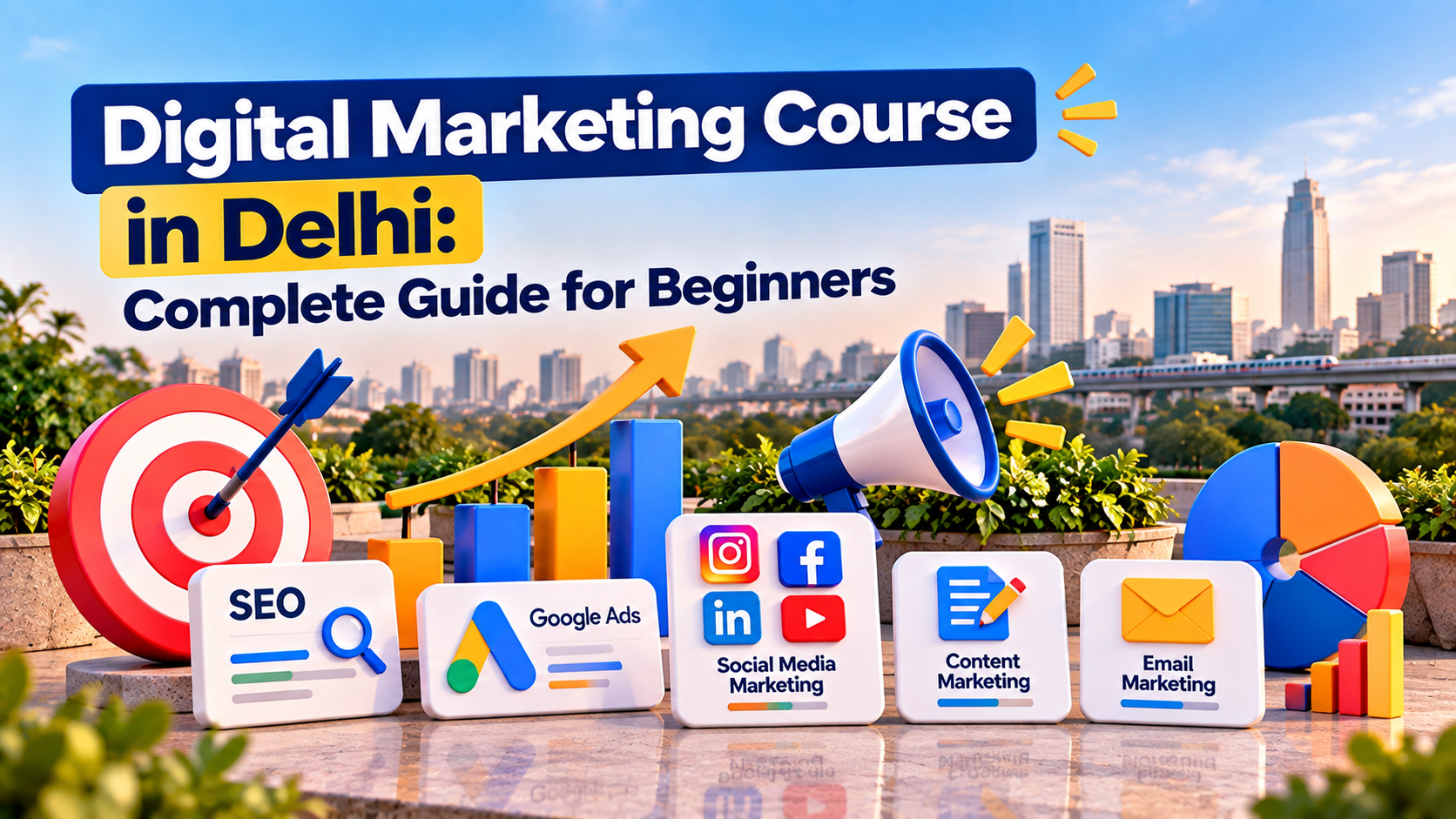
Digital Marketing Course in Delhi: Complete Guide for Beginners
Digital marketing has become an important skill for businesses, brands and professionals looking to build a strong online presence. From search engines and social media to paid advertising, content creation and analytics, digital marketing covers multiple activities that help businesses reach and engage their target audiences.
For beginners, choosing the right digital marketing course in Delhi can be an important step toward developing practical marketing skills. A structured course can introduce learners to essential concepts while providing opportunities to work with commonly used tools, campaigns and real-world marketing tasks.
Whether you are a student, graduate, working professional, entrepreneur or someone planning a career change, understanding what a digital marketing course includes can help you choose a learning path that matches your goals.
Digital Marketing Course in Delhi
A digital marketing course in Delhi generally introduces learners to the major channels and techniques used to promote products, services and brands online. Depending on the program, the curriculum may cover search engine optimisation, social media marketing, paid advertising, content marketing, email marketing, analytics, marketing automation and AI-powered marketing tools.
A practical course should go beyond definitions and help learners understand how different channels work together. For example, a business may use SEO to attract organic traffic, social media to build engagement, Google Ads to generate visibility, content marketing to educate potential customers and analytics to measure campaign performance.
What Is Digital Marketing?
Digital marketing refers to promoting products, services or brands through digital channels such as search engines, websites, social media platforms, email and online advertising.
It allows businesses to communicate with audiences through different online touchpoints and use digital data to understand campaign performance.
Major areas of digital marketing include:
- Search Engine Optimisation
- Search Engine Marketing
- Social Media Marketing
- Content Marketing
- Email Marketing
- Performance Marketing
- Affiliate Marketing
- Influencer Marketing
- Marketing Analytics
- Marketing Automation
Why Learn Digital Marketing in Delhi?
Delhi and the surrounding National Capital Region have a large ecosystem of businesses, startups, agencies, educational institutions and technology companies. This creates opportunities for people interested in working with organisations that depend on online customer acquisition and brand visibility.
Learning in Delhi can also provide access to classroom or online training, professional networking, internships and practical projects, depending on the institute and program selected.
For beginners, structured training can provide a clear path from basic concepts to campaign planning, execution and measurement.
Who Can Join a Digital Marketing Course?
Digital marketing can be explored by people from different educational and professional backgrounds. A course can be suitable for:
- College students
- Recent graduates
- Working professionals
- Entrepreneurs
- Business owners
- Freelancers
- Content creators
- Career changers
- Sales and marketing professionals
You do not necessarily need a technical background to begin learning digital marketing. Basic computer skills, communication skills and an interest in online marketing can provide a useful starting point.
Digital Marketing Course Eligibility
Eligibility requirements vary between institutes. Many beginner-level digital marketing programs are designed for learners who have completed school or college, while some are also open to working professionals and entrepreneurs.
Before enrolling, check the institute's specific eligibility requirements, course duration, learning mode, curriculum and practical training structure.
What Do You Learn in a Digital Marketing Course?
A comprehensive digital marketing curriculum usually combines multiple marketing channels rather than focusing on only one skill. Beginners should look for a program that connects marketing fundamentals with practical applications.
Digital Marketing Fundamentals
The fundamentals module can introduce target audiences, customer journeys, marketing funnels, brand positioning, digital channels and campaign objectives.
These concepts provide the foundation for understanding why a particular channel or marketing activity is being used and what outcome it is expected to achieve.
Search Engine Optimisation
Search Engine Optimisation, commonly known as SEO, focuses on improving the visibility of web pages in search engine results.
A beginner-friendly SEO module can cover:
- Keyword research
- Search intent
- On-page SEO
- Technical SEO basics
- Content optimisation
- Internal linking
- Off-page SEO concepts
- SEO analytics
SEO can help businesses attract relevant organic traffic over time.
Social Media Marketing
Social media marketing focuses on using social platforms to build brand awareness, engage audiences and support business objectives.
Learners can explore content planning, platform-specific audiences, content calendars, campaigns and engagement measurement across platforms such as Instagram, Facebook and LinkedIn.
Google Ads and Meta Ads
Paid advertising helps businesses reach potential customers through search engines and social media platforms. A digital marketing course may introduce Google Ads, Meta Ads, campaign structures, keyword targeting, audience targeting, ad copy, bidding concepts and performance measurement.
Learners can also study metrics such as clicks, impressions, conversion rate, cost per click and return on advertising spend. Comparing different audiences and creatives can help marketers identify opportunities for campaign optimisation.
Content Marketing
Content marketing involves creating useful and relevant material to attract, educate and engage a target audience.
A course may cover content strategy, topic research, content calendars and content creation for different channels.
Content can include:
- Blog articles
- Social media posts
- Videos
- Infographics
- Email newsletters
- Guides and ebooks
- Website content
Email Marketing
Email marketing allows businesses to communicate directly with subscribers and customers through newsletters, product announcements, promotional campaigns, lead nurturing and customer retention activities.
Learners can explore audience segmentation, subject lines, email copy, calls to action, campaign planning and performance measurement.
Marketing Analytics
Analytics helps marketers understand whether campaigns are achieving their objectives. Learners can study website traffic, user behaviour, advertising performance, social media engagement and conversions.
Analytics can help answer questions such as:
- Where are visitors coming from?
- Which campaigns generate traffic?
- Which pages receive the most engagement?
- Which marketing channels generate conversions?
- Where are users leaving the conversion journey?
AI and Marketing Automation
Artificial Intelligence is increasingly being integrated into digital marketing workflows. AI tools can assist with content ideas, customer research, campaign planning, data analysis, personalisation and repetitive marketing activities.
Marketing automation can connect these activities into workflows for tasks such as lead management, content distribution, customer communication and reporting.
AI and automation should support marketing expertise rather than replace strategic thinking. Marketers still need to understand audiences, branding, SEO, advertising and analytics.
Practical Projects in Digital Marketing
Practical projects can help beginners understand how different marketing channels work together and provide examples of applied skills for a portfolio.
Examples include:
- SEO website optimisation
- Keyword research project
- Social media campaign
- Google Ads campaign plan
- Meta Ads campaign plan
- Content marketing strategy
- Email marketing campaign
- Lead generation campaign
- Digital marketing analytics report
- AI-powered marketing workflow
Project-based learning can demonstrate how learners apply marketing concepts instead of relying only on certificates.
Tools Used in Digital Marketing
Digital marketers work with different tools depending on the campaign and marketing channel.
Common categories include:
- Search engine optimisation tools
- Google Analytics
- Google Search Console
- Google Ads
- Meta Ads Manager
- Social media management platforms
- Email marketing platforms
- Content creation tools
- AI marketing tools
- Marketing automation platforms
The specific tools taught in a course depend on its curriculum and current industry requirements.
Digital Marketing Course Duration and Fees in Delhi
Course duration can vary depending on the institute, curriculum, learning mode and amount of practical training. Short-term programs may focus on specific skills, while comprehensive programs can cover multiple channels and include projects, assignments and practical campaigns.
Digital marketing course fees in Delhi can also vary significantly. Pricing may depend on the number of modules, training format, certifications, practical projects, internship opportunities and career support.
Before enrolling, compare the total duration and fee with what is actually included, such as training hours, projects, tools, certification and post-course support.
Online vs Classroom Digital Marketing Training
Both online and classroom learning can provide useful ways to study digital marketing. The appropriate format depends on your schedule, preferred learning style and access to practical support.
Online training can provide flexibility for students and working professionals, while classroom programs can offer direct interaction with trainers and other learners. Some institutes also offer live online sessions that combine flexibility with instructor interaction.
How to Choose a Digital Marketing Course in Delhi
Before selecting a course, compare the program based on the skills you want to develop and the type of practical experience it provides.
- Course syllabus
- Practical project opportunities
- Trainer experience
- Learning format
- Course duration
- Tools covered
- Certification
- Internship opportunities
- Career support
- Course fees
A useful curriculum should balance theory with practical application and be updated as search engines, advertising platforms, social media features and AI tools evolve.
AI-Powered Digital Marketing Course
As AI becomes part of modern marketing workflows, learners can benefit from understanding both traditional digital marketing and AI-powered techniques. Upskill Now's program combines digital marketing concepts with AI tools and practical applications.
The program covers areas such as SEO, Google Ads, Meta Ads, performance marketing, content marketing, analytics, email marketing, automation and AI tools. Learners can explore the AI digital marketing program to review the course structure.
Career Opportunities After Digital Marketing Training
Digital marketing skills can be applied across agencies, startups, established businesses, ecommerce companies and other organisations with online marketing requirements.
Depending on your skills and experience, possible roles include:
- Digital Marketing Executive
- SEO Executive
- SEO Specialist
- Social Media Executive
- Content Marketing Executive
- Performance Marketing Executive
- Google Ads Specialist
- Social Media Manager
- Email Marketing Specialist
- Digital Marketing Analyst
- Marketing Automation Specialist
- Digital Marketing Consultant
Freelancers can also specialise in areas such as SEO, content writing, social media management, paid advertising or email marketing. Entrepreneurs can use digital marketing knowledge to manage their own online presence and understand how different acquisition channels work.
Beginner-Friendly Digital Marketing Roadmap
If you are starting from scratch, a structured roadmap can make the learning process easier to manage.
- Learn digital marketing fundamentals.
- Understand websites and online customer journeys.
- Learn keyword research and SEO.
- Explore content marketing.
- Learn social media marketing.
- Understand Google Ads and paid advertising.
- Explore Meta Ads.
- Learn email marketing.
- Understand analytics and campaign measurement.
- Learn AI tools and marketing automation.
- Build practical marketing projects.
- Create a portfolio and start applying for opportunities.
Common Mistakes Beginners Should Avoid
One common mistake is trying to learn every digital marketing platform at the same time. Beginners can build a stronger foundation by understanding the fundamentals first and then developing specialised skills.
Another mistake is focusing only on certificates. Practical projects, campaign exercises and portfolio work can provide evidence of how you apply what you have learned.
It is also important to keep learning because search engines, advertising platforms, social media features and AI tools continue to change.
Conclusion
A digital marketing course in Delhi can introduce beginners to skills including SEO, social media marketing, content marketing, Google Ads, Meta Ads, email marketing, analytics, marketing automation and AI-powered marketing.
The field continues to evolve as businesses adopt new platforms, technologies and AI-powered tools. Building a strong foundation while gaining practical experience can help learners understand how different digital channels work together.
If you are planning to start learning digital marketing, focus on a curriculum that combines fundamentals, practical projects, current tools and measurable campaign skills. Consistent practice and a strong portfolio can then help you apply those skills to internships, jobs, freelance projects or business growth.
Address: A-3, Third Floor, Rajouri Garden, New Delhi – 110027
Phone: 9999848160 | 9711448765
Email: connect@upskillnow.in