- how to start a career in digital marketing
- digital marketing career without experience
- how to get a digital marketing job with no experience
- digital marketing jobs for beginners
- digital marketing skills for beginners
- learn digital marketing from scratch
Introduction
Starting a career in digital marketing without prior work experience is possible if you build the right skills, gain practical experience, and create a strong portfolio. Digital marketing includes areas such as SEO, social media marketing, content marketing, email marketing, paid advertising, and analytics.
The good news for beginners is that many digital marketing skills can be learned through online resources and practical projects. You do not necessarily need years of professional experience to begin building your career.
1. Understand What Digital Marketing Is
Digital marketing refers to promoting products, services, or brands through digital channels. Before starting your career, understand the major areas of digital marketing, including:
- Search Engine Optimization (SEO)
- Social Media Marketing
- Content Marketing
- Search Engine Marketing (SEM)
- Email Marketing
- Performance Marketing
- Affiliate Marketing
- Web Analytics
Understanding these areas will help you decide which digital marketing skills you want to develop first.
2. Choose a Digital Marketing Specialization
Beginners do not need to master every digital marketing skill immediately. Start with one area and gradually expand your knowledge.
Popular digital marketing career paths include:
- SEO Specialist
- Social Media Executive
- Content Marketing Executive
- PPC Specialist
- Digital Marketing Executive
- Email Marketing Specialist
- Performance Marketing Specialist
Choosing a specialization can make it easier to focus your learning and build relevant practical experience.
3. Learn the Essential Digital Marketing Skills
To start a digital marketing career without experience, develop practical skills that employers commonly look for.
Important skills include:
- Keyword research
- SEO fundamentals
- Content creation
- Social media management
- Google Analytics
- Search advertising
- Basic copywriting
- Competitor research
- Data analysis
- Marketing strategy
Focus on understanding how these skills are applied to real marketing campaigns rather than only learning their definitions.
4. Learn Digital Marketing from Scratch
If you are completely new to digital marketing, follow a structured learning path.
Start with the fundamentals and then move toward practical applications.
Suggested learning order:
- Digital marketing fundamentals
- SEO basics
- Content marketing
- Social media marketing
- Google Ads and paid advertising
- Analytics and reporting
- Marketing strategy
- Practical projects
This approach can help beginners develop their knowledge step by step.
5. Build Practical Experience Without a Job
One of the biggest challenges for beginners is gaining experience before getting their first job.
You can create your own practical projects to demonstrate your skills.
For example:
- Create a website or blog
- Perform keyword research
- Optimize blog articles for SEO
- Create a social media content calendar
- Run a small test advertising campaign
- Analyze website traffic
- Create a competitor analysis report
These projects can become evidence of your ability even when you do not have formal work experience.
6. Create a Digital Marketing Portfolio
A portfolio can help demonstrate your practical knowledge to potential employers.
Your portfolio can include:
- SEO projects
- Keyword research reports
- Content samples
- Social media campaigns
- Website optimization examples
- Marketing strategies
- Analytics reports
- Advertising campaign examples
Instead of simply stating that you know digital marketing, show what you can actually do.
7. Get Certifications
Digital marketing certifications can help beginners demonstrate their knowledge.
Consider learning about certifications related to:
- SEO
- Google Analytics
- Google Ads
- Social media marketing
- Content marketing
- Digital marketing fundamentals
Certifications should complement practical projects rather than replace hands-on experience.
8. Start Freelancing or Internships
Internships and freelance projects can provide valuable practical experience.
Beginners can look for opportunities involving:
- SEO
- Social media management
- Content writing
- Website optimization
- Lead generation
- Paid advertising
- Email marketing
Even small projects can help you understand how digital marketing works in real business situations.
9. Build Your Professional Online Presence
Your online presence can also work as a demonstration of your digital marketing skills.
Consider creating:
- A professional LinkedIn profile
- A personal website
- A digital marketing portfolio
- A professional social media profile
- A collection of your marketing projects
You can also publish useful content about SEO, social media, content marketing, or other areas you are learning.
10. Apply for Entry-Level Digital Marketing Jobs
Once you have basic knowledge and some practical projects, start applying for entry-level positions.
Search for roles such as:
- Digital Marketing Intern
- Digital Marketing Executive
- SEO Executive
- Social Media Executive
- Content Marketing Executive
- PPC Executive
- Marketing Assistant
When applying, highlight your skills, projects, certifications, and portfolio instead of focusing only on your lack of professional experience.
11. Prepare for Digital Marketing Interviews
Digital marketing interviews can include both theoretical and practical questions.
Prepare topics such as:
- What is SEO?
- What is keyword research?
- How does Google Search work?
- What is social media marketing?
- What is PPC advertising?
- What is conversion rate?
- What is Google Analytics?
- How would you improve website traffic?
- How would you create a social media strategy?
Be prepared to explain your own projects and the results or learnings from them.
12. Keep Learning and Updating Your Skills
Digital marketing changes continuously. Search algorithms, advertising platforms, social media features, analytics tools, and AI technologies continue to evolve.
After getting your first opportunity, continue improving your skills through:
- Practical projects
- Industry resources
- Courses
- Case studies
- Marketing tools
- Real campaign analysis
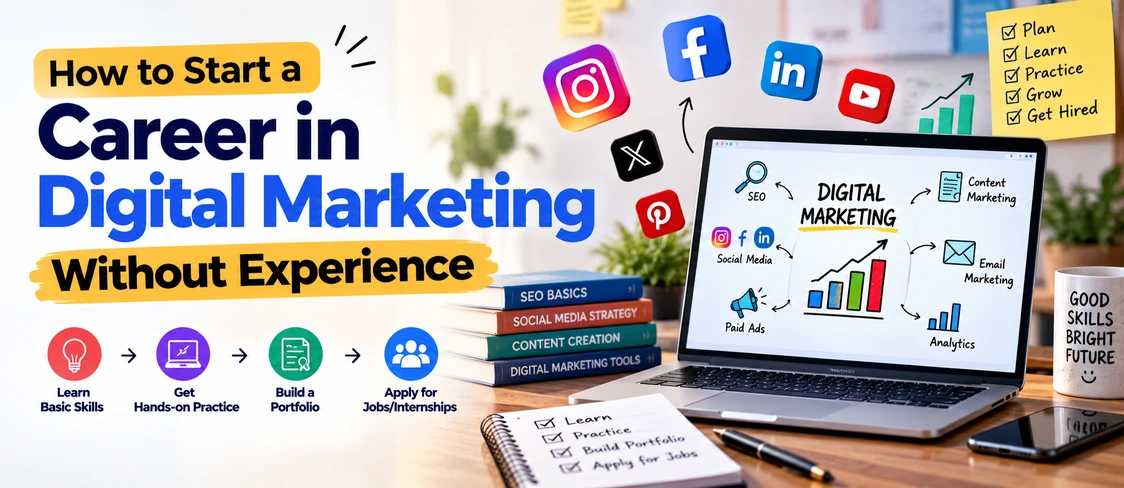
Digital Marketing Career Roadmap Without Experience
A simple beginner roadmap is:
Learn → Practice → Build Projects → Create Portfolio → Get Internship/Freelance Experience → Apply for Jobs → Grow Your Skills
Following a practical roadmap can help you move from having no experience to becoming job-ready.
Common Mistakes Beginners Should Avoid
When starting a digital marketing career, avoid:
- Learning only theory
- Trying to master every skill at once
- Not creating practical projects
- Having no portfolio
- Applying without customizing your resume
- Ignoring analytics
- Stopping learning after completing one course
FAQs
Can I start a digital marketing career without experience?
Yes. Beginners can develop digital marketing skills through structured learning, practical projects, internships, freelance work, and portfolio building.
How can I get a digital marketing job with no experience?
Build relevant skills, complete practical projects, create a portfolio, gain internship or freelance experience, and apply for entry-level digital marketing roles.
What digital marketing skills should beginners learn?
Beginners can start with SEO, content marketing, social media marketing, analytics, paid advertising, keyword research, and basic copywriting.
Do I need a degree to start a digital marketing career?
A degree can be useful for some roles, but practical skills, relevant knowledge, certifications, projects, and a strong portfolio can also help beginners demonstrate their capabilities.
How long does it take to learn digital marketing?
The time varies depending on your learning schedule and the skills you want to develop. Consistent practice and working on real projects can help you become job-ready faster.
Conclusion
Starting a career in digital marketing without experience is achievable with a structured approach. Focus on learning essential skills, practice through real projects, build a portfolio, gain internship or freelance experience, and apply for entry-level opportunities.
The key is to replace a lack of professional experience with demonstrable skills and practical work.
📍 Address: A-3, Third Floor, Rajouri Garden, New Delhi – 110027