
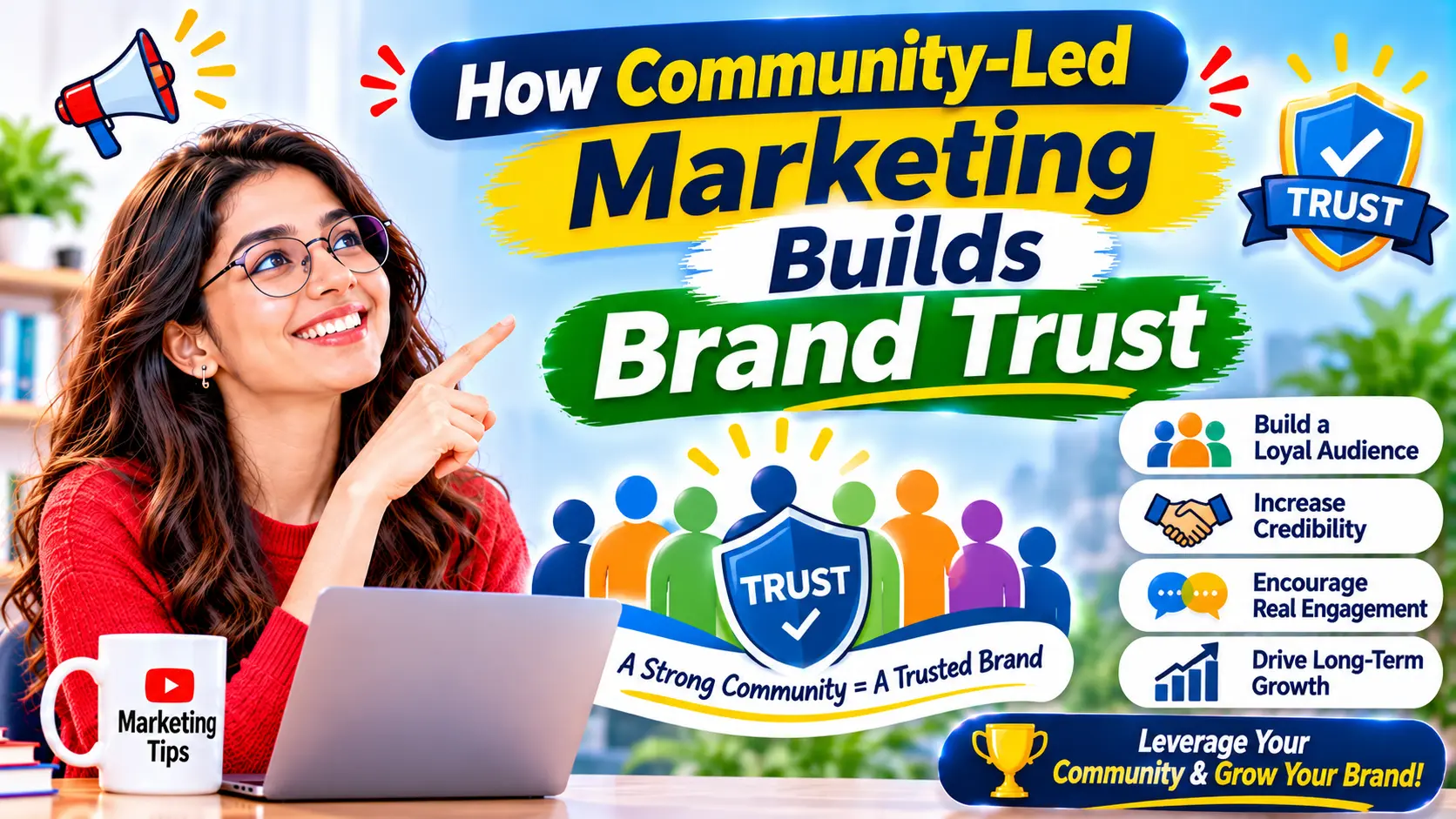
How Community-Led Marketing Builds Brand Trust
Quick Answer: Community-led marketing is a strategy that builds brand trust by encouraging customers, followers and industry professionals to interact through online communities. It focuses on meaningful conversations, customer feedback and shared experiences rather than only promotional advertising.
Table of Contents
- What Is Community-Led Marketing?
- Why Is Community-Led Marketing Important?
- How Community-Led Marketing Builds Brand Trust
- Best Platforms for Community Marketing
- How to Build a Successful Brand Community
- How to Measure Community Marketing Performance
- Related Digital Marketing Guides
- Frequently Asked Questions
1. What Is Community-Led Marketing?
Community-led marketing is a digital marketing strategy in which businesses build and engage communities around their brand, products, services or industry.
These communities allow customers, potential buyers and brand representatives to exchange information, ask questions, discuss problems and share experiences.
Popular community channels include WhatsApp groups, LinkedIn communities, Reddit, Discord and Facebook Groups.
2. Why Is Community-Led Marketing Important?
Consumers increasingly look for genuine information and recommendations before making purchasing decisions. A brand community provides an opportunity to interact with businesses and other customers instead of relying only on advertisements.
Community marketing can help businesses:
- Develop stronger customer relationships.
- Understand customer requirements and expectations.
- Encourage customer participation.
- Collect useful product and service feedback.
- Increase brand recognition and customer advocacy.
3. How Community-Led Marketing Builds Brand Trust
Encourages Authentic Conversations
Community discussions allow customers to ask questions, share opinions and discuss their experiences. Honest conversations can make businesses more approachable.
Creates Strong Customer Relationships
Regular interaction helps businesses understand customer concerns and respond to feedback. This can support long-term customer relationships.
Builds Social Proof
When customers share genuine experiences, reviews and recommendations, other people gain additional information before making purchasing decisions.
Provides Valuable Customer Insights
Discussions help marketers understand common problems, product expectations and emerging industry trends.
Encourages User-Generated Content
Active communities can generate reviews, testimonials, photographs, videos and product recommendations that support wider marketing campaigns.
4. Best Platforms for Community Marketing
- WhatsApp: Useful for customer communication, updates and smaller communities.
- Facebook Groups: Suitable for interest-based discussions and customer communities.
- LinkedIn: Effective for professional networking and B2B discussions.
- Reddit: Helps brands understand niche audiences and industry conversations.
- Discord: Supports interactive communities around technology, gaming and specialised interests.
Learn more about how Reddit and Quora can improve brand visibility through meaningful discussions and useful answers.
5. How to Build a Successful Brand Community
Step 1: Identify Your Target Audience
Understand who your community is for, what interests its members share and which problems they want to solve.
Step 2: Select the Right Platform
Choose a platform based on audience behaviour. A professional B2B audience may prefer LinkedIn, while niche interest groups may be more active on Reddit or Discord.
Step 3: Share Valuable Content
Publish educational resources, discussions, industry updates, tutorials and practical insights instead of continuously promoting products.
Step 4: Encourage Participation
Ask relevant questions, respond to feedback and recognise useful contributions from community members.
Step 5: Build Consistent Communication
Maintain regular interactions and establish clear community guidelines to create a welcoming environment.
6. How to Measure Community Marketing Performance
Businesses should measure meaningful participation instead of focusing only on follower counts.
- Number of active members.
- Comments and meaningful interactions.
- Repeat participation.
- Customer feedback and sentiment.
- Referral website traffic.
- Community-generated leads and conversions.
Community discussions can also generate private sharing activity. Read Dark Social Marketing: The Hidden Side of Social Media Traffic to understand how private recommendations influence website traffic.
7. Related Digital Marketing Guides
- Dark Social Marketing: The Hidden Side of Social Media Traffic
- How to Track Website Traffic Coming from WhatsApp and Private Groups
- How Reddit and Quora Can Improve Brand Visibility
- How User-Generated Content Improves Brand Awareness
- Why Creator-Led Marketing Is Becoming Important for B2B Businesses
For beginners, explore Best Digital Marketing Institute for Students After 12th to learn about practical digital marketing skills.
8. Frequently Asked Questions
What is community-led marketing?
Community-led marketing is a strategy that uses online or offline communities to build customer relationships, encourage engagement and develop brand trust.
Why is community-led marketing important?
It helps businesses create meaningful relationships, collect feedback, encourage customer advocacy and improve long-term engagement.
Which platforms are best for community marketing?
WhatsApp, LinkedIn, Facebook Groups, Reddit and Discord are popular options. The right platform depends on the target audience.
How do you measure community-led marketing success?
Measure active members, engagement, repeat participation, customer sentiment, referrals and conversions.
Is community-led marketing useful for B2B businesses?
Yes. B2B businesses can build professional communities where industry experts and potential customers exchange knowledge and discuss business challenges.
Conclusion
Community-led marketing helps businesses build trust through meaningful customer relationships and authentic conversations. By creating valuable communities, responding to customer needs and encouraging participation, brands can develop stronger connections with their audiences.