
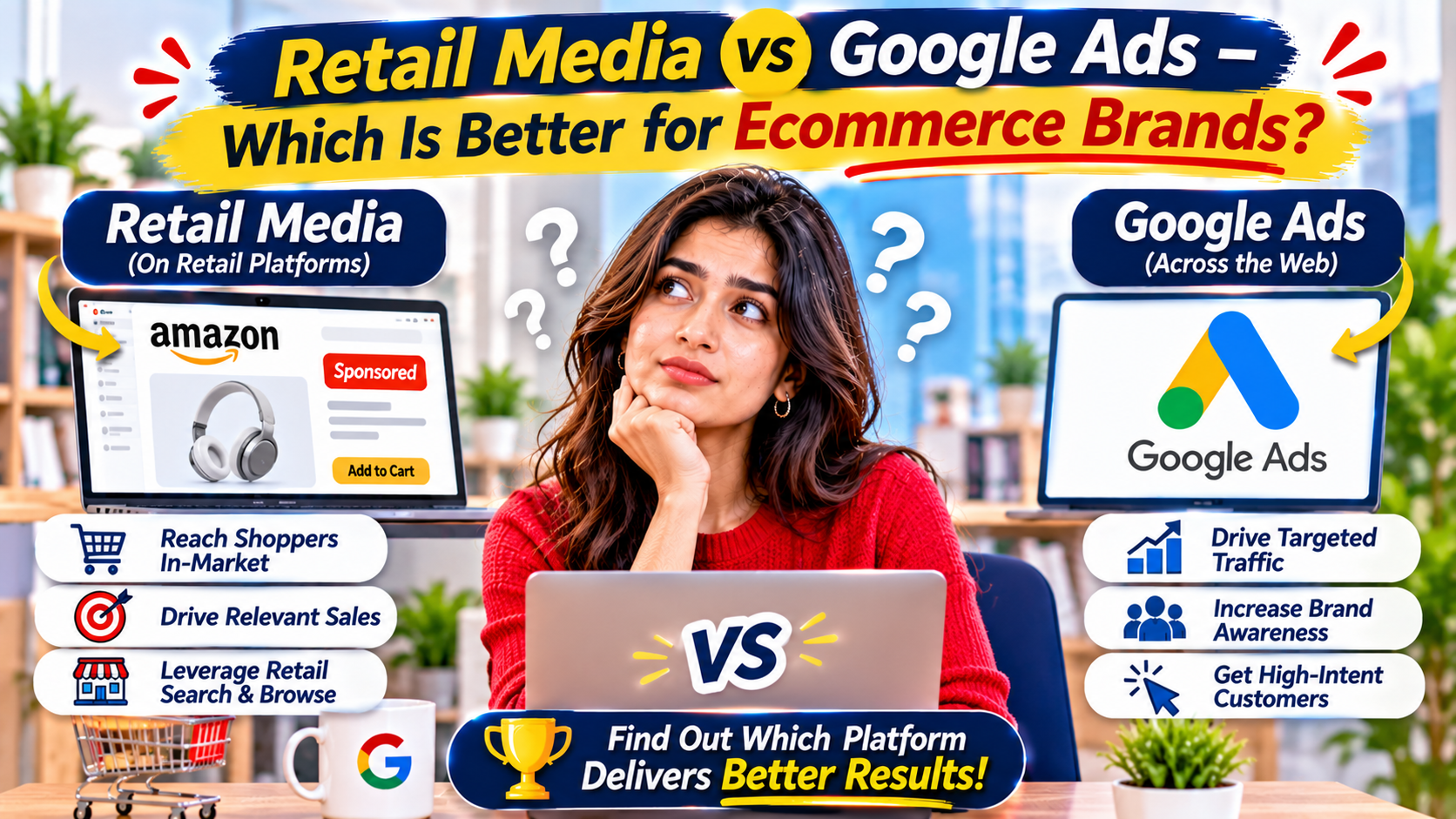
Retail Media vs Google Ads: Which Is Better for Ecommerce Brands?
Quick Answer: Retail media is useful for promoting products within retailer-owned shopping environments, while Google Ads helps ecommerce businesses reach users through Google Search, Shopping, YouTube and other advertising placements. The better option depends on product availability, target audience, campaign objectives and advertising profitability.
Table of Contents
- What Is Retail Media Advertising?
- What Are Google Ads?
- Retail Media vs Google Ads: Key Differences
- Benefits of Retail Media for Ecommerce
- Benefits of Google Ads for Ecommerce
- Which Is Better for Ecommerce Brands?
- Can Businesses Use Both Channels?
- Important Advertising Metrics to Track
- Related Digital Marketing Guides
- Frequently Asked Questions
1. What Is Retail Media Advertising?
Retail media advertising allows brands to promote their products through a retailer's digital platforms, applications, physical stores and other supported advertising channels.
For example, an ecommerce retailer may display sponsored product listings when shoppers search for specific product categories.
Retail media advertising is particularly useful for brands that sell products through participating retail platforms and want to increase visibility within shopping environments.
2. What Are Google Ads?
Google Ads is an online advertising platform that allows businesses to promote their products and services through Google Search, YouTube, websites, apps and other supported placements.
For ecommerce businesses, Google Ads offers several advertising formats.
- Search Ads: Text advertisements displayed in relevant search results.
- Shopping Ads: Product advertisements featuring details such as images, prices and retailers.
- Display Ads: Visual advertisements shown across eligible websites and applications.
- YouTube Ads: Video advertisements displayed across YouTube placements.
- Performance Max: Campaigns designed to reach customers across multiple Google advertising channels.
3. Retail Media vs Google Ads: Key Differences
Audience Targeting
Retail media platforms can use retailer-provided shopping and audience insights to help brands reach relevant shoppers. Google Ads offers targeting based on search intent, audience signals, demographics and other campaign settings.
Customer Purchase Intent
Retail media reaches users within shopping environments, where they may already be comparing products. Google Search Ads can reach people actively searching for specific products or solutions, while other Google Ads formats can support discovery and consideration.
Advertising Placements
Retail media advertisements appear within retail websites, shopping applications and supported in-store environments. Google Ads provides access to search results, YouTube, display inventory and other Google advertising placements.
Performance Measurement
Retail media platforms may provide metrics such as sponsored product clicks, advertising spend and attributed sales. Google Ads provides campaign reporting covering impressions, clicks, conversions, cost and other performance indicators.
Campaign Reach
Google Ads can help brands reach audiences across multiple digital environments. Retail media generally focuses on shoppers interacting with a particular retailer's ecosystem and associated advertising inventory.
4. Benefits of Retail Media for Ecommerce
- Promotes products within relevant shopping environments.
- Provides access to retailer-specific audience insights.
- Supports product discovery and sponsored listings.
- Helps measure advertising performance against retail sales data.
- Can reach shoppers closer to a purchasing decision.
5. Benefits of Google Ads for Ecommerce
- Reaches customers actively searching for products.
- Offers multiple advertising formats and placements.
- Supports product promotion through Shopping Ads.
- Provides campaign-level conversion tracking.
- Allows businesses to test different audiences, keywords and creatives.
- Supports both customer acquisition and remarketing strategies.
6. Which Is Better for Ecommerce Brands?
There is no universal winner because the effectiveness of each platform depends on business objectives, product categories, customer behaviour and available advertising budgets.
Choose Retail Media When:
- Your products are listed on participating retail platforms.
- You want to increase product visibility within shopping environments.
- You want to use available retailer audience insights.
- You want to measure performance through retail advertising reports.
Choose Google Ads When:
- You want to reach users actively searching for products.
- You need advertising across multiple digital channels.
- You want to generate traffic for your own ecommerce website.
- You want to experiment with Search, Shopping, Display and YouTube campaigns.
7. Can Businesses Use Both Advertising Channels?
Yes. Using retail media and Google Ads together can help ecommerce brands reach customers at different stages of the buying journey.
For example, a business can use Google Search and Shopping Ads to attract potential customers while using retail media to improve product visibility on participating ecommerce platforms.
However, brands should compare campaign performance carefully, avoid double-counting conversions and evaluate the profitability of each channel separately.
8. Important Advertising Metrics to Track
- Click-through rate (CTR): Measures the percentage of impressions that generate clicks.
- Cost per click (CPC): Measures average advertising cost per click.
- Conversion rate: Measures the percentage of visitors who complete a desired action.
- Return on ad spend (ROAS): Measures advertising-attributed revenue relative to advertising expenditure.
- Customer acquisition cost (CAC): Measures the cost of acquiring customers.
- Average order value (AOV): Measures the average value of customer orders.
9. Related Digital Marketing Guides
- What Are Retail Media Networks and How Do They Work?
- How User-Generated Content Improves Brand Awareness
- Dark Social Marketing: The Hidden Side of Social Media Traffic
- How Community-Led Marketing Builds Brand Trust
To understand how different advertising channels fit into a complete digital marketing strategy, read Best Digital Marketing Institute for Students After 12th.
10. Frequently Asked Questions
What is the difference between retail media and Google Ads?
Retail media promotes products through retailer-owned advertising environments, while Google Ads reaches users across Google Search, YouTube, display inventory and other supported channels.
Is retail media better than Google Ads for ecommerce?
Neither is universally better. Retail media is useful for promoting products within retailer ecosystems, while Google Ads provides broader digital advertising opportunities.
Can small ecommerce businesses use retail media?
Yes, if they meet the eligibility requirements of participating retail platforms and their product margins support the advertising investment.
Is Google Shopping part of Google Ads?
Yes. Shopping Ads are an advertising format available through Google Ads that can display product images, prices and retailer information.
Can businesses use retail media and Google Ads together?
Yes. Businesses can use both channels to reach customers across different stages of the shopping journey and compare their individual performance.
Conclusion
Retail media and Google Ads offer different opportunities for ecommerce advertising. Retail media helps brands promote products within retail shopping environments, while Google Ads provides access to a wider range of digital advertising placements.
Instead of choosing a platform based only on popularity, ecommerce brands should evaluate audience relevance, campaign objectives, conversion performance and profitability. A combination of both channels can support a more balanced advertising strategy.
Ready to Explore Digital Marketing?
Connect with Upskill Now to learn about the course curriculum, upcoming batches and enrolment process.
Visit Upskill NowContact Upskill Now
Website: www.upskillnow.in
Email: connect@upskillnow.in
Phone: 9999848160 / 9711448765
Address: A-3, Third Floor, Rajouri Garden, New Delhi – 110027.