
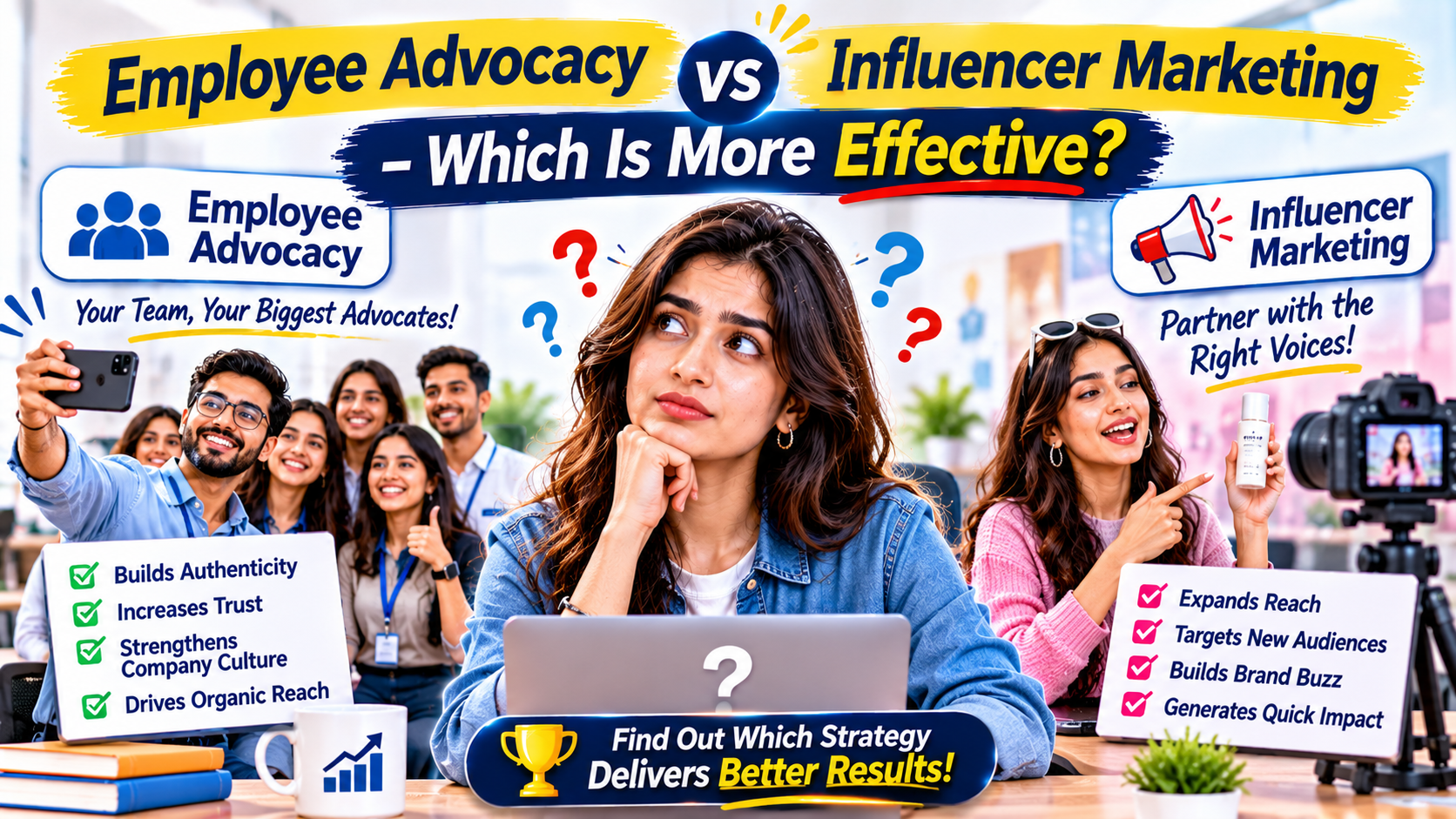
Employee Advocacy vs Influencer Marketing: Which Is More Effective?
Quick Answer: Employee advocacy involves employees sharing company-related content through their personal networks, whereas influencer marketing involves collaborating with external creators to reach their established audiences. Both strategies can build brand trust, but the right choice depends on business objectives, audience and marketing budget.
Table of Contents
- What Is Employee Advocacy?
- What Is Influencer Marketing?
- Employee Advocacy vs Influencer Marketing: Key Differences
- Benefits of Employee Advocacy
- Benefits of Influencer Marketing
- Which Strategy Is Better for B2B Businesses?
- How to Measure Both Strategies
- Related Digital Marketing Guides
- Frequently Asked Questions
1. What Is Employee Advocacy?
Employee advocacy is a marketing strategy in which employees voluntarily share company updates, industry insights, achievements, educational content and professional experiences through their personal networks.
For example, employees may share company announcements, LinkedIn articles, product updates and workplace experiences with their connections.
2. What Is Influencer Marketing?
Influencer marketing involves collaborating with content creators, industry experts or individuals who have an engaged audience. Businesses work with these creators to promote products, services or ideas through relevant content.
In B2B marketing, influencers can include consultants, business founders, technology experts and professional LinkedIn creators.
3. Employee Advocacy vs Influencer Marketing: Key Differences
Audience Reach
Employee advocacy uses the combined professional networks of employees. Influencer marketing provides access to the established audiences of selected creators.
Brand Credibility
Employee advocacy can communicate authentic workplace experiences and internal expertise. Influencer marketing can provide external industry perspectives and specialised audience trust.
Cost Structure
Employee advocacy generally requires investment in content support, employee training and internal coordination. Influencer marketing may involve creator fees, campaign production expenses and partnership management.
Content Control
Employee advocacy often involves company-provided content guidelines, while influencer partnerships require a balance between brand objectives and the creator's communication style.
Lead Generation
Both strategies can support lead generation. Employee networks may help reach professional connections, while relevant influencers can introduce products and services to targeted audiences.
4. Benefits of Employee Advocacy
- Expands brand visibility through employee networks.
- Encourages employees to participate in brand communication.
- Highlights internal knowledge and workplace culture.
- Supports employer branding and professional networking.
- Can be implemented without paying external influencer fees.
5. Benefits of Influencer Marketing
- Provides access to established niche audiences.
- Helps brands reach new customer segments.
- Creates opportunities for expert-led educational content.
- Supports product awareness and campaign promotion.
- Can generate relevant referral traffic and business enquiries.
6. Which Strategy Is Better for B2B Businesses?
The right approach depends on business objectives, available resources, target audiences and campaign requirements.
Employee advocacy may be a suitable starting point for companies that want employees to share professional knowledge and strengthen brand communication.
Influencer marketing may be more suitable when a business wants to reach a specialised audience, collaborate with industry experts or promote a specific solution.
Businesses can also combine both strategies to create a stronger brand communication approach.
7. How to Measure Both Strategies
Employee Advocacy Metrics
- Employee participation rate.
- Content shares and engagement.
- Reach through employee networks.
- Website referral traffic.
- Recruitment and employer-branding outcomes.
Influencer Marketing Metrics
- Creator campaign reach.
- Engagement and audience quality.
- Referral traffic.
- Qualified leads and registrations.
- Conversions and campaign ROI.
8. Related Digital Marketing Guides
- How LinkedIn Influencer Marketing Generates Quality B2B Leads
- Why Creator-Led Marketing Is Becoming Important for B2B Businesses
- How User-Generated Content Improves Brand Awareness
- How Community-Led Marketing Builds Brand Trust
- How Reddit and Quora Can Improve Brand Visibility
Explore Best Digital Marketing Institute for Students After 12th to learn more about influencer marketing and other practical digital marketing subjects.
9. Frequently Asked Questions
What is the main difference between employee advocacy and influencer marketing?
Employee advocacy involves employees sharing company-related content through their networks, whereas influencer marketing involves external creators promoting a brand to their established audiences.
Is employee advocacy cheaper than influencer marketing?
Employee advocacy may require less external creator expenditure, but it still involves resources for training, communication, content and programme management.
Which strategy is better for B2B marketing?
Both can be effective. Employee advocacy supports internal brand communication, while influencer marketing can help businesses reach targeted professional audiences.
Can employees become brand influencers?
Yes. Employees with industry expertise and an engaged professional network can become valuable brand advocates and thought leaders.
Can employee advocacy and influencer marketing work together?
Yes. Businesses can combine employee content sharing with external creator collaborations to increase reach, credibility and engagement.
Conclusion
Employee advocacy and influencer marketing are both valuable people-led marketing strategies. Businesses should evaluate their goals, resources and target audiences before choosing an approach. Combining the two can create a stronger and more balanced brand communication strategy.