
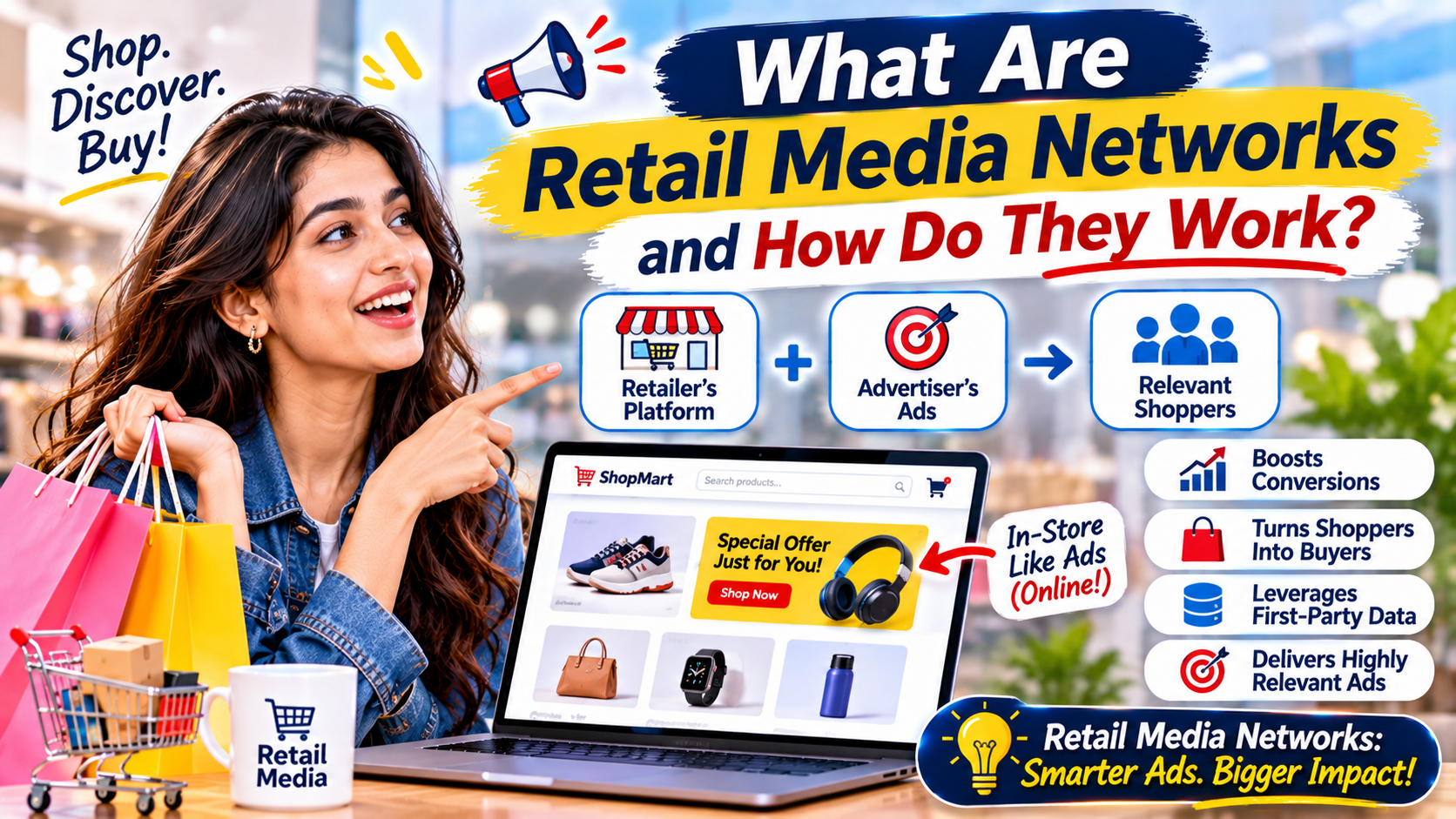
What Are Retail Media Networks and How Do They Work?
Quick Answer: Retail media networks are advertising platforms operated by retailers that allow brands to promote their products through retailer websites, mobile applications, search results and physical stores. They help businesses reach shoppers within retail environments and measure advertising performance through available campaign data.
Table of Contents
- What Are Retail Media Networks?
- How Do Retail Media Networks Work?
- Popular Retail Media Advertising Formats
- Examples of Retail Media Networks
- Benefits of Retail Media Networks for Brands
- Role of Retail Media in Ecommerce
- Retail Media vs Google Ads
- Related Digital Marketing Guides
- Frequently Asked Questions
1. What Are Retail Media Networks?
A retail media network is an advertising platform operated by a retailer that allows brands to promote their products or services through the retailer's website, mobile application, in-store media or other supported channels.
For example, an ecommerce retailer may allow a brand to display sponsored products when customers search for related items on its website.
Retail media networks help brands connect advertising with shopping activity and can provide campaign insights based on the retailer's available first-party data, subject to applicable privacy requirements.
2. How Do Retail Media Networks Work?
Retail media networks generally connect retailers, advertisers and consumers through advertising placements and campaign management systems.
Step 1: Retailers Provide Advertising Opportunities
Retailers offer advertising placements across their websites, applications, search results, product pages and sometimes physical stores.
Step 2: Brands Select Their Target Audience
Advertisers select products, campaign objectives, budgets and audience segments based on the available targeting options.
Step 3: Ads Reach Relevant Shoppers
Sponsored products, display advertisements and other promotional placements appear in suitable shopping environments.
Step 4: Retailers Provide Campaign Reports
Advertisers can evaluate available campaign metrics such as impressions, clicks, attributed sales and advertising expenditure.
3. Popular Retail Media Advertising Formats
Sponsored Product Ads
These advertisements display selected products within search results or product recommendation sections.
Sponsored Brand Ads
These formats promote a brand and a collection of products through prominent advertising placements.
Display Advertising
Banner and display advertisements can appear on retailer websites, applications and other supported inventory.
In-Store Retail Media
Digital screens, promotional displays and other in-store advertising opportunities allow retailers to connect physical shopping with brand campaigns.
4. Examples of Retail Media Networks
Several ecommerce and retail businesses operate advertising platforms that allow brands to promote products within their shopping ecosystems.
- Amazon Ads: Offers sponsored product, sponsored brand and display advertising formats.
- Walmart Connect: Provides advertising opportunities across Walmart's retail ecosystem.
- Instacart Ads: Supports advertising within online grocery shopping experiences.
- Target's Roundel: Provides retail media advertising opportunities through Target's ecosystem.
Available advertising formats and market access vary by retailer and country.
5. Benefits of Retail Media Networks for Brands
- Purchase-focused audiences: Reach shoppers while they are browsing relevant products.
- First-party data opportunities: Use retailer-provided audience insights and targeting options where permitted.
- Product discovery: Improve product visibility within shopping environments.
- Campaign measurement: Analyse available impressions, clicks and attributed sales.
- Advertising relevance: Promote products in environments connected to customer shopping interests.
6. Role of Retail Media in Ecommerce
Retail media networks are becoming an important consideration for ecommerce brands because they connect product promotion with shopping environments.
They can complement other digital advertising channels by helping businesses reach shoppers closer to purchase decisions.
However, retailers may have different measurement standards, audience data and advertising costs. Brands should evaluate campaign objectives and profitability before allocating significant budgets.
7. Retail Media vs Google Ads
Traditional digital advertising platforms help brands reach users across search engines, social networks and websites. Retail media networks focus on advertising opportunities within retail environments and related inventory.
Both channels can support ecommerce growth, but their audience targeting, placements and campaign measurement methods are different.
Read Retail Media vs Google Ads: Which Is Better for Ecommerce Brands? to understand the differences in detail.
8. Related Digital Marketing Guides
- Retail Media vs Google Ads: Which Is Better for Ecommerce Brands?
- How User-Generated Content Improves Brand Awareness
- Why Creator-Led Marketing Is Becoming Important for B2B Businesses
- Dark Social Marketing: The Hidden Side of Social Media Traffic
For a wider understanding of digital marketing channels, explore Best Digital Marketing Institute for Students After 12th.
9. Frequently Asked Questions
What is a retail media network?
A retail media network is an advertising platform operated by a retailer that allows brands to promote products through retail websites, applications, stores and other supported channels.
How do retail media networks make money?
Retailers generate advertising revenue by charging brands for sponsored listings, display advertisements, promoted placements and other advertising opportunities.
What are examples of retail media networks?
Examples include Amazon Ads, Walmart Connect, Instacart Ads and Target's Roundel.
Why are retail media networks important for ecommerce?
They allow brands to promote products within shopping environments and reach consumers who may already be researching or purchasing relevant products.
Are retail media networks suitable for small businesses?
They can be suitable for small businesses that sell through participating retailers, depending on platform eligibility, advertising costs, margins and campaign objectives.
Conclusion
Retail media networks are creating new advertising opportunities for ecommerce businesses and product brands. By promoting products within retail shopping environments, businesses can reach relevant shoppers and evaluate campaign performance through retailer-provided reporting.
Understanding how retail media works can help marketers make better decisions when planning ecommerce advertising strategies.